

2022-02-22
Gamma emitter on a radio tube. In this experiment we will consider a fairly simple scheme for obtaining high-energy electromagnetic radiation from a high-voltage power source, and we will receive predominantly gamma radiation of 0-100 μSv/hour from a radio tube . Such a flow exceeds the norm by 0-1000 times, so we kindly ask you to pay attention to the safety precautions when working with such a device!. Gamma radiation is electromagnetic radiation with extremely high energy and a short wavelength [1]. In nature, it occurs during nuclear transformations, particle annihilation, and also in a number of astrophysical processes. 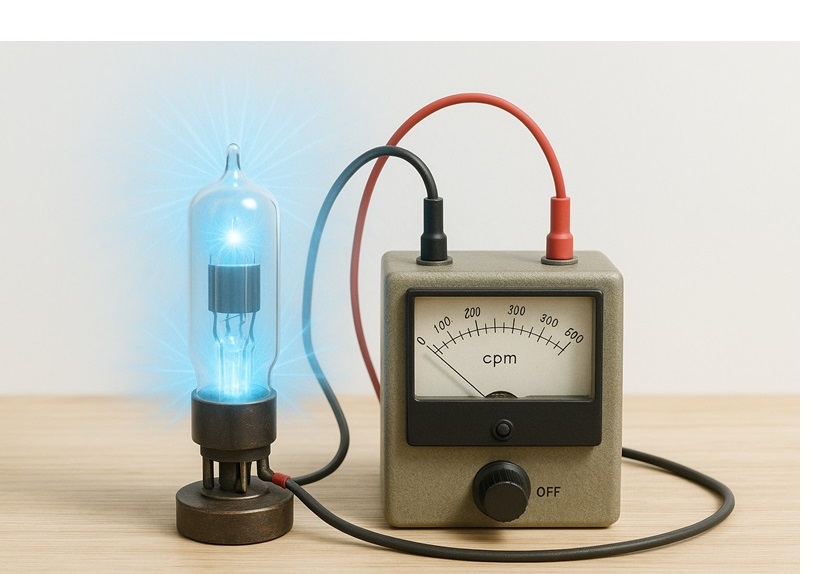 In laboratory and applied practice, gamma radiation is used in medicine, non-destructive testing, as well as in scientific research into the structure of matter and in experiments with free energy. Sources of gamma radiation are usually radioactive isotopes or particle accelerators. However, recently there has been increasing interest in the possibility of generating high-energy radiation using non-standard approaches, including those based on vacuum electronic devices, such as radio tubes [2]. . Radio tubes are devices that use thermionic emission to control the flow of electrons in a vacuum. With high-voltage operation and a special design of the electrode system, it is possible to achieve conditions under which accelerated electrons collide with a target or other electrodes with an energy sufficient for X-ray bremsstrahlung. If the voltage exceeds a certain threshold, the bremsstrahlung spectrum can extend into the low-energy gamma range. . Although from a practical point of view this is technically difficult and potentially dangerous, this concept is of scientific interest as an attempt to apply classical vacuum electron technology to problems that go beyond standard radio frequency applications. Such an approach can become an experimental model for studying bremsstrahlung processes, electron avalanches, and the generation of high-energy photons in compact and affordable systems. . ⚠️ Safety Warning When Working with Gamma Radiation Sources . Gamma radiation is ionizing and can have a harmful effect on living organisms even at relatively low dose rate levels. A level of up to 0 μSv/hour is 0 for short-term exposure, but requires strict adherence to radiation safety measures. . Key Points:
 - Minimize exposure time. Try to reduce the time spent in the radiation zone to the minimum required to perform the work.
- Increase distance. The radiation intensity decreases with the square of the distance. At a distance twice as far, the dose decreases by a factor of four.
- Use shielding. Use lead or other absorbing materials to shield the source. Even a thin layer of lead significantly reduces the level of gamma radiation.
- Monitoring the radiation level. Use dosimeters to continuously monitor the dose rate and integral dose in the work area. Do not start work without a working measuring device.
- Personal protection. Keep track of your individual radiation dose using personal dosimeters. Observe the annual permissible dose levels .
- Training and admission. Work with gamma radiation sources is permitted only to trained individuals who have been instructed and have permission to work with IRS .
- Nominal heating voltage 0 V;
- Heating current 0 ± 0 mA;
- Nominal anode voltage 0 V;
- Anode current 0 mA;
- Reverse current 0 μA;
- Limiting reverse voltage 0 kV;
- Limiting power dissipated by the anode 0 W;
- Anode-cathode capacitance 0 pF.