


2026-05-12
Простой и стабильный генератор синусоидальных колебаний
Синусоидальные генераторы традиционно считаются достаточно капризными устройствами: для получения устойчивой амплитуды и малых искажений обычно приходится усложнять схему.
Особенно это заметно в широком диапазоне питающих напряжений, где большинство простых решений либо теряют стабильность, либо требуют тщательной настройки.
Обычно простота схемы плохо сочетается с высокой стабильностью работы.
Однако в данной конструкции удалось объединить оба качества благодаря необычному включению MOSFET-транзистора и оригинальному использованию частотозадающей LC-цепи.
Генератор формирует на выходе синусоидальный сигнал с максимальной частотой 650 кГц, содержит всего пять компонентов, быстро собирается и при указанных номиналах не требует настройки.
Схема работает в диапазоне питающих напряжений от 5 до 60 В при токе потребления около 1…5 мА, в зависимости от напряжения питания и сопротивления резистора R1.
При необходимости выходную мощность можно увеличить, добавив всего несколько дополнительных компонентов — при этом параметры генератора практически не будут зависеть от подключённой нагрузки.
Ещё одной особенностью схемы является высокий КПД, сохраняющийся во всём диапазоне питающих напряжений.

Рис. 1 Принципиальная схема простого генератора синуса на mosfet-транзисторе
|
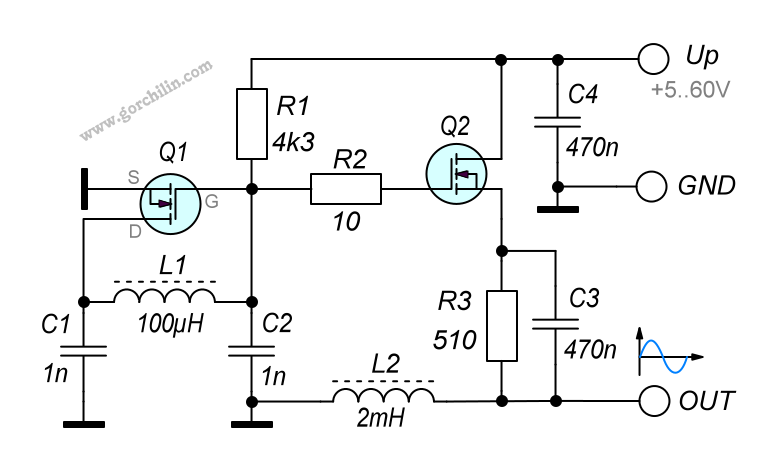
Рис. 2 Принципиальная схема генератора синуса на mosfet-транзисторе с усилителем мощности
|
Принципиальная схема генератора показана на рисунке 1.
В отличие от классических схем, питающее напряжение Up подаётся не на сток MOSFET-транзистора Q1, а на его затвор, создавая тем самым постоянное смещение относительно истока.
В начальный момент переход сток-исток оказывается открытым, и через индуктивность L1 начинает протекать ток.
Благодаря накоплению энергии в магнитном поле индуктивность некоторое время поддерживает напряжение на переходе затвор-исток, однако постепенно оно уменьшается до уровня, при котором транзистор закрывается.
После закрытия транзистора энергия, запасённая в LC-цепи, начинает возвращаться обратно, вызывая обратный процесс.
Через некоторое время напряжение на затворе снова достигает порога открытия транзистора, и цикл повторяется.
Таким образом в схеме возникают устойчивые колебания.
Индуктивность L1 совместно с конденсаторами C1, C2 и внутренними ёмкостями транзистора Q1, образует П-образный колебательный контур C1-L1-C2.
Именно этот контур определяет синусоидальную форму выходного сигнала и обеспечивает высокую стабильность частоты генерации.
Частота работы устройства рассчитывается по классическим формулам для П-контура, где эквивалентная ёмкость определяется последовательным соединением C1 и C2, с учётом паразитных ёмкостей MOSFET-транзистора.

Рис. 3 Осциллограмма на выводе OUT
|

Рис. 4 Вывод OUT - желтый луч, измерительная точка (1) - синий луч
|

Рис. 5 Амплитуда на C2 - желтый луч, вывод OUT - синий луч (по рис. 2)
|
Осциллограммы работы генератора представлены на рисунках 3 и 4 при напряжении питания Up 12 вольт, и R1 равным 4 кОм.
Номиналы C1 и C2 здесь равны 1.2 nF, а L1 — 550 uH.
На рисунке 3 показан сигнал на выходе OUT, а на рисунке 4 дополнительно отображён сигнал на стоке транзистора Q1 (измерительная точка 1).
Эта осциллограмма позволяет наглядно увидеть процесс накопления и возврата энергии в LC-контуре, а также момент переключения MOSFET-транзистора, за счёт которого поддерживается генерация колебаний.
Усилитель
Выходная мощность базового генератора определяется в основном сопротивлением R1, поэтому схема рассчитана преимущественно на работу с высокоомной нагрузкой.
Однако добавление нескольких дополнительных компонентов позволяет реализовать на транзисторе Q2 истоковый повторитель, существенно увеличивающий нагрузочную способность устройства.
Принципиальная схема генератора с усилителем мощности приведена на рисунке 2.
В таком варианте выходной сигнал снимается с дросселя L2, который при необходимости может быть выполнен в виде трансформатора для согласования практически с любой нагрузкой.
Благодаря высокому входному сопротивлению повторителя усилительный каскад практически не влияет на работу основного LC-генератора.
Это позволяет сохранить стабильность частоты и хорошую форму синусоидального сигнала даже при заметном увеличении выходной мощности.
На рисунке 5 показана работа схемы с дополнительным усилителем мощности.
Жёлтым лучом отображается напряжение на конденсаторе C2, а синим — сигнал на выходе OUT.
Характер осциллограмм показывает, что подключение выходного каскада практически не влияет на форму синусоидального сигнала и режим работы основного генератора.
Благодаря этому удаётся сохранить стабильность частоты и низкий уровень искажений даже при подключении нагрузки.
Элементная база
Особое внимание следует уделить выбору транзистора Q1.
Для устойчивой генерации и получения качественной синусоиды желательно использовать MOSFET с минимальной входной ёмкостью CGS или Ciss, особенно при работе на частотах выше 100 кГц.
Одним из наиболее удачных вариантов оказался транзистор IRF840,
который хорошо подходит как для основного генератора, так и для усилительного каскада на Q2 [1].
При этом к транзистору Q2 предъявляются менее жёсткие требования по входной ёмкости, поэтому в этом узле можно применять практически любые подходящие MOSFET-транзисторы.
В некоторых случаях вместо Q2 допустимо использовать даже биполярный n-p-n транзистор.
Сопротивление резистора R1 выбирается в зависимости от питающего напряжения Up.
Для диапазона 5…12 В обычно подходит сопротивление порядка 3…5 кОм, а при напряжении 50…60 В — около 15…20 кОм.
Мощность резистора также должна соответствовать рабочему напряжению: для низковольтных вариантов достаточно 0.125 Вт, тогда как при питании 50…60 В желательно использовать резистор мощностью не менее 0.5 Вт.
Остальные резисторы схемы (рис. 2) могут иметь мощность 0.125 Вт или выше.
Ёмкости желательно применять с минимальными диэлектрическими потерями, хотя здесь хорошо работают и обычные плёночные конденсаторы.
Индуктивность L1 можно использовать в виде готового дросселя,
однако для точной подстройки частоты предпочтительно намотать катушку самостоятельно и использовать регулируемый сердечник.
Для L2 в усилительном каскаде подойдёт стандартный заводской дроссель.
Методика расчёта номиналов и выбора элементов будет рассмотрена далее.
Расчёт генератора
При номиналах, указанных на схеме 1, и использовании транзистора IRF840 резонансная частота генератора получается около 550 кГц.
Она рассчитывается по формулам для П-образного контура с учётом входной и выходной ёмкостей MOSFET-транзистора.
Если принять C1 = C2 = C, то для других номиналов резонансная частота такого контура определяется выражением:
\[\tag{1} f_r = {1 \over 2 \pi \sqrt{L_1 C_e}} \]
где \(L_1\) — индуктивность катушки L1, а \(C_e\) — эквивалентная ёмкость контура:
\[\tag{2} C_e = {(C + C_{oss}) (C + C_{iss}) \over 2C + C_{oss} + C_{iss}} \]
Здесь \(C_{iss}\) и \(C_{oss}\) — входная и выходная ёмкости транзистора Q1, которые берутся из справочных данных [1].
Все величины в приведённых формулах подставляются в системе СИ.
Ёмкости конденсаторов C1 и C2 не рекомендуется выбирать менее 500 пФ, если входная ёмкость транзистора Q1 превышает 1000 пФ.
В противном случае паразитные ёмкости MOSFET начинают слишком сильно влиять на параметры П-контура, что усложняет расчёт и ухудшает повторяемость схемы.
По этой причине для подобных транзисторов рекомендуемая резонансная частота не должна превышать примерно 650 кГц.
Нижний предел частоты принципиально не ограничен и определяется только выбранными номиналами L1, C1 и C2, а также практическими размерами катушки и конденсаторов.
Важным параметром колебательного контура является его волновое сопротивление:
\[\tag{3} Z = \sqrt{L_1 \over C_e} \]
От этого значения во многом зависит амплитуда синусоидального сигнала на выходе генератора.
Оптимальное значение \(Z\) находится примерно в диапазоне 500…1200 Ом: чем выше волновое сопротивление контура, тем большую амплитуду можно получить на выходе схемы.
Для усилительного каскада на транзисторе Q2 необходимо также выбрать минимальную индуктивность дросселя L2.
Она определяется из условия:
\[\tag{4} L_2 \gt {1500 \over 2\pi f_r} \]
Если вместо частоты \(f_r\) подставить выражение (1), то это же условие можно записать через параметры основного контура:
\[\tag{5} L_2 \gt 1500 \sqrt{L_1 C_e} \]
На практике индуктивность L2 лучше выбирать с небольшим запасом относительно расчётного минимума, чтобы усилительный каскад меньше нагружал генератор и не ухудшал форму синусоидального сигнала.
Используемые материалы
- Транзистор IRF840. Характеристики. [PDF]